Wir verwenden Cookies, um unsere Website optimal für Sie zu gestalten. Mit dem Bestätigen des Buttons "Akzeptieren" stimmen Sie der Verwendung von Cookies zu. Durch Anklicken der untenstehenden Checkboxen können Sie auswählen, welche Cookie-Kategorien Sie zulassen möchten. Durch Klicken auf die Schaltfläche "Mehr anzeigen" erhalten Sie eine Beschreibung jeder Kategorie. Weitere Informationen finden Sie in unserer Datenschutzerklärung.
Notwendige Cookies helfen, eine Website nutzbar zu machen, indem sie grundlegende Funktionen wie die Seitennavigation und den Zugang zu sicheren Bereichen der Website ermöglichen. Ohne diese Cookies kann die Website nicht ordnungsgemäß funktionieren.
Präferenz-Cookies ermöglichen es einer Website, sich Informationen zu merken, die das Verhalten oder Aussehen der Website verändern, wie z.B. Ihre bevorzugte Sprache oder die Region, in der Sie sich befinden.
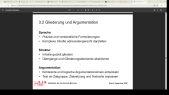
Die Möglichkeiten mit KI die Gliederung und den Argumentationsfaden zu verbessern.
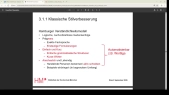
So, jetzt wollen wir uns noch mit dem Thema Gliederung und Argumentation auseinandersetzen. Auch hier kann die KI natürlich retrospektiv als Tutor eingesetzt werden. Und wir müssen auch erst mal überlegen, was sind denn überhaupt die Anforderungen an eine gute Gliederung und eine solide wissenschaftliche Argumentation? Da gibt es eigentlich drei Punkte. Einmal diese sprachliche Ebene. Das heißt, ich brauche in einem wissenschaftlichen Text eine präzise, verständliche Formulierung. Ich muss die Inhalte, so komplex sie auch sind, adressatengerecht darstellen. Dann habe ich die strukturelle Ebene als Anforderung. wo ich eben gezielt gliedern muss, auch wieder entsprechend der jeweiligen Textart, die ich erstelle, ob es jetzt ein Journal-Article oder eine Abschlussarbeit ist. Und ich muss Übergänge auch zwischen den einzelnen Gliederungspunkten miteinander abstimmen. Und ich muss als Drittes die Argumentation möglichst logisch und kohärent machen. Und ich muss so eine Argumentationslinie, quasi wie so einen roten Faden durch die Arbeit legen, die entsprechend auch zielführend ist, diese Argumentationslinie, damit ich am Ende I can just keep an eye on my research question and can be able to evaluate. And lastly, think of the main question of the whole text. I must think of the individual text, the situation, in the case of my group, but also my scientific goal is to look at. And now I must take my argument really out. And now we're going to look at the next step, how I can use AI to achieve these goals. We're going to try this a little bit top-down, also from the grove structure to detail. As first as I just fell in the red one, the one that should be the Gliederung through the So that means that we have to look at the outer structure of the Gliederung. And now we have in many research works a given Gliederung structure, for example by a journal article or a conference proceeding. There I have the so-called IMRAD-Schema Introduction, Methodology, Research and Discussion. And that is basically described. Anders sieht es zum Beispiel aus, wenn ich eine Abschlussarbeit schreibe. Dort kann ich eine chronologische Gliederung haben, wo ich natürlich auch mit einer Introduction irgendwo anfangen muss. Dann geht das weiter mit dem Stand des Wissens, also das ist dann die zweite Stelle Research. Dann kommt Methodology, also die Datenerhebung, Datenanalyse, Interpretation, Schlussteileinordnung der Ergebnisse und so weiter. Dann gibt es natürlich andere Gliederungsschemata bei wissenschaftlichen Arbeiten. So im Abschlussarbeitskontext könnte ich mir eine parallele Gliederung vorstellen. Da habe ich eine Introduction. Dann kommt ein Teil, wo ich ein Tool zum Beispiel vorstelle, eine Theorie. Und dann kommt der nächste Abschnitt des Hauptteils, wo das nächste Tool, die nächste Theorie vorgestellt wird und dann vielleicht noch ein drittes Objekt. Und diese drei Objekte, die stehen einfach gleich. I'm not going to do anything with anything to do with them. A third variant for a thesis-of-the-science-of-the-glieder could be a thesis-of-the-science-of-the-glieder-all. I have a framework in Form of an introduction. Then comes the thesis, the anti-these, and these and anti-these, they interact with a bit of a together. Then you can think about how you can make a synthesis, a good integration, form a way. Then you have the end of the study. So here you have to ask the AI, which is the same thing I have to ask, which glider-on-schema I have to do with? I have to know and can I have to say, which is the same thing I have to do with? then also to think about how to think about the different parts of the individual parts, which are the theoretical backgrounds, and the methodic, which I ask, is the methodic to the theory? How does it fit to the research question? How does it fit to the methodology to the methodic, to the research question? einem roten Faden folgt. Und dann muss man sich überlegen, ob man, wenn man von diesem globalen Level weggeht, auch in einzelnen Details solche strukturellen Gedanken machen kann. Also zum Beispiel, wenn ich jetzt einen einzelnen Absatz anschaue, dann gibt es da auch eine gewisse Form, wie die normalerweise strukturiert sind. Der wichtigste Kerngedanke sollte am Anfang stehen. Und dann kommen Details, die diesen Kerngedanken näher erklären, vielleicht nochmal unterstreichen, erläutern, eine Begründung geben. Dann noch etwas detaillierter, vielleicht auch nochmal ein Beispiel, das diese Begründung im Einzelfall illustrieren soll. Und diese Art von Struktur, Kerngedanke zuerst, Details nacheinander, auch das kann ich ja fragen, ob das eingehalten ist, ob diese Argumente einerseits abgegrenzt sind, aber andererseits es auch sprachlich gelungene Überleitungen in diese Detailbereiche gibt. Ein weiteres Charakteristikum der wissenschaftlichen Argumentation ist die Frage, ist meine Argumentation ausgewogen? Denn die Wissenschaft denkt immer... in Pro und Contra. Was spricht für eine Argumentation? Was spricht dagegen? Was sagt ein Ergebnis aus? Wo sind seine Limitierungen? Ist beides ausreichend gewürdig? Wurden Alternativen berücksichtigt? All diese Gedanken kann man auch mit der KI durchgehen und kann die eigenen Ergebnisse daraufhin untersuchen lassen. Die KI kennt die, This kind of scientific argumentations, how you can also see the structure of science science, very well, because it's just a bit of a way that is to repeat the process of science. We can't go out of it, that by all of the uncertainty over the detail of the training process of training, the big AI models with millions of scientific work, whether it's a journal article, whether it's a course of the work, a PhD, a PhD, a Bachelor, Master, or a Doctor working. So can I just find out how I have a argument in my work. If we have such steps on a detailed level, I have argument in my work. If we have such steps on a detailed level, I have argument in my work, then it is something that we should never have for a very complex work. That would be the AI to be afraid. She is programmed to answer, we would also have a kind of answer. In the worst case, it would be a very complex answer, which is a quick feedback, but not a real substance. erreichen, einen echten Erkenntniszuwachs erzielen. Das heißt, hier sind die Studienlagen sehr eindeutig. Wenn man auf so einer detaillierten Ebene etwas zu seinem Text wissen will, muss man schrittweise vorgehen. Man muss immer daran denken, wie komplex ist die Aufgabe, wo sind einzelne Teilschritte, jeder Schritt einzeln muss angeschaut werden. Auch bei argumentativen Texten, wo ein Argument aufeinander im anderen aufbaut, wo es Zusammenhänge zu berücksichtigen gilt, kleinschrittig Argument für Argument. And we see, if we want to use the AI to improve our text in this way substantially, then it is a task, which will very much of the resources and very detailed information from us will be able to. The previous slide has already shown that a complex argument must be small and small overpruelled. If we think about the challenges, where a whole whole work is, like the connection between the Ahead and the Ahead, where it should be different elements of the AI, then it is for the AI not to be able to do anything. In such a complex text, a long text, comes often to the AI, the context of the AI, a bit of verloren. And that leads to a certain risk of a certain interpretation. And we have to have a special eye on the AI, if we have a question of the AI, if the answers are then also inhaltlich, if they are not understandable or if we know that the AI has not the whole context with the context. Kommen wir zu speziellen Aufgaben. in the correction of scientific texts. A good idea is that the AI should be in the case, our citation is formal to test. Especially if we give a citation of the AI directly with our prompt, through a document, such as a manual of APA or of IEEE-styles, and then ask if the AI is the formal right of our Quell-Bellege and of course also in the literature. I'm going to go to the literature. Thank you. Thank you. Thank you. Thank you. If I get a request from the AI, it may be possible to prevent it. In this process of a very limited text, I have to say that, if I have a request, through the use of the AI, this text that I don't really understand. If I use it to use my own academic work, not to really understand. If I try to express myself, that I have to use the other thoughts of the AI, then it's more so that the AI is a good paraphrase, but I maybe not really accept my query. It was I... indirektes Zitat angebe, was besser ein direktes Zitat gewesen wäre. Also diese Dinge, wo ich dann vielleicht bewusst nicht so ganz sauber arbeite, das ist problematisch. Und natürlich auch, wenn ich das Gefühl habe, ich entwickle gar keine selbstständige Fähigkeit, ich bleibe abhängig, ich hinterfrage gar nicht. Ich habe mich nicht so ganz in die Fähigkeit, In this context is actually that I through so a Quillbot paraphrase not a passable Zitat generate, a passable Formuliering generate, the I can build in my text. So there will that's the relationship from Quillbot and a new development of this of course the success of the way to be successful. Einen letzten Punkt in diesem Kontext möchte ich aufmachen mit dem Thema Zusammenfassungen. Zusammenfassungen sollten normalerweise klare Strukturen haben. Es sollte ein Grundschema eingehalten werden, gerade wenn Sie jetzt zum Beispiel einen Journal-Artikel zusammenfassen, dann bleibt diese Imrat-Struktur grundsätzlich erhalten. Nachteilig ist bei Zusammenfassungen, wenn sie inhaltlich oberflächlich sind, nicht wirklich wissenschaftlicher Stil verwendet wird. when the original text is very deep, or even when the original text is very deep, or even when the original text is very deep, when the original text is very deep, or even when the original text is very deep, or even when the original text is very deep, when the original text is very deep, and when the original text is very deep, whether you have all the chatbots like ChatGBT, Co-Pilot, Mistral and other types of types, or whether we have chatbots the specialised are for the theme of the theme of the theme of this specialization tools. These are a little easier to use text-mengen to make sense of sense. Of course, the quality is a little better, but not in a so important way. If you decide to decide in a way of the process, the process of the theme of the theme of the theme, then they should be for... Tools entscheiden, die abstractive zusammenfassen, also die mit eigenen Satzformulierungen versuchen zu arbeiten. Ich sage bewusst versuchen zu arbeiten, denn wir beobachten auch bei diesen Tools, auch wenn sie spezialisiert sind wie SciSpace, dass immer wieder auch Werbatinübernahmen vorkommen, dass sehr oft very weak paraphrases come, where only a little umformulated is. And all that is of course also dangerous, if you think, you could use as a basis for a citation, after the AI has written it with own words. That is not so. There are many big difficulties. The other side, what is it for other technologies? Extractive summaries. There have we Quilbert schon kennengelernt. Da ist Extractive summaries sicherlich sinnvoll, weil Quilbert nur einzelne Sätze verändern soll. Da brauchen wir nichts mit eigenen Worten nochmal zusammenzutragen. Skimming als manuelle Methode der Zusammenfassung geht durchaus auch sehr schnell bei Texten, wenn man das ein bisschen übt und weiß, wohin man schauen muss. Und das ist möglicherweise auch da wieder der bessere Punkt, weil es natürlich einen größeren Lerneffekt mit sich bringt. Wenn man den Lerneffekt bei einer Zusammenfassung maximieren will, dann sind eher an intellektuelle Methoden zu denken wie SQ3R und Ähnliches. Wenn Sie dazu mehr wissen möchten, dann empfehlen wir auch die Schulung Textanalyse.